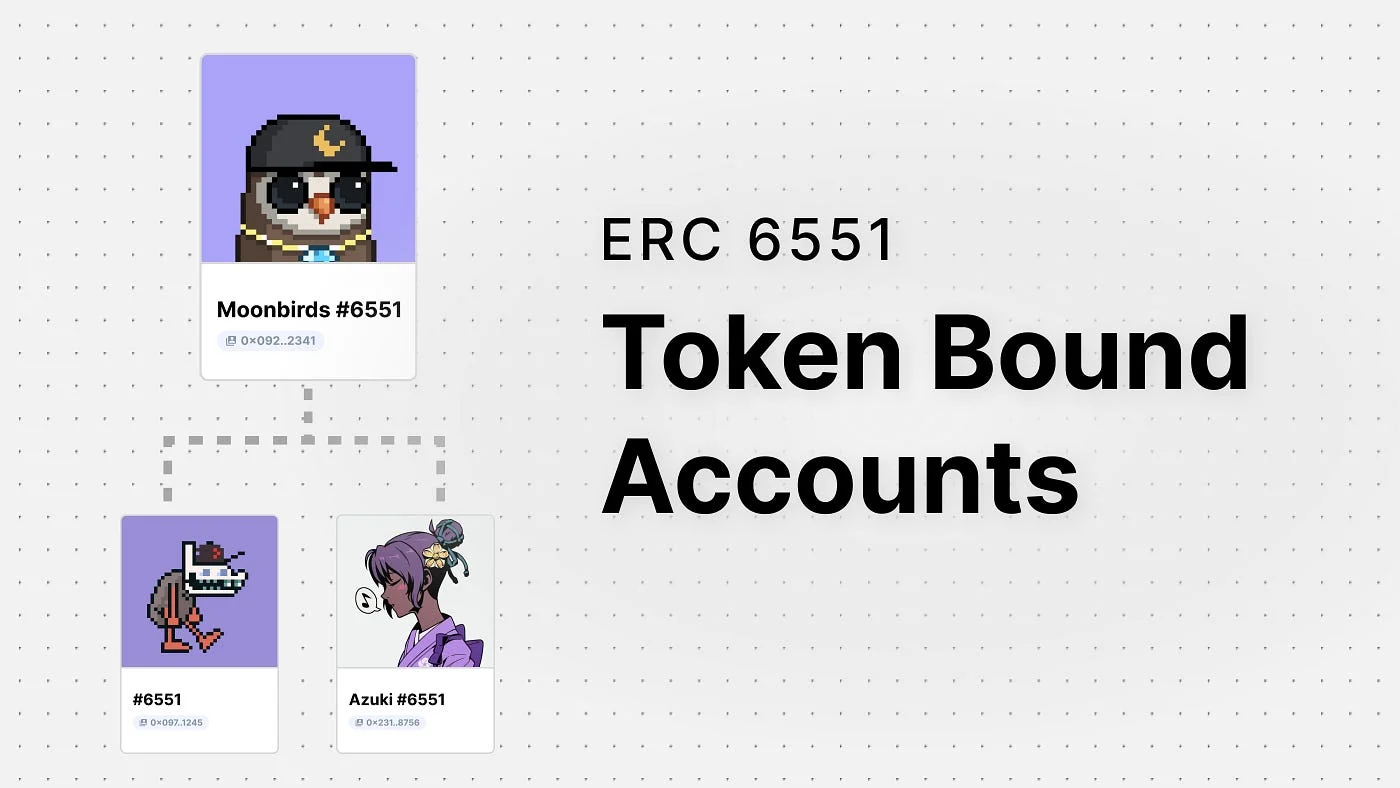
berbagiberkat.com – Token Bound Accounts (TBAs), introduced through ERC-6551 (Ethereum Request for Comment 6551), represent one of the most significant advancements in the NFT ecosystem since the original ERC-721 standard. Often described as giving every NFT its own “wallet” or “backpack,” ERC-6551 enables non-fungible tokens to function as smart contract accounts. This allows NFTs to own assets, execute transactions, interact with decentralized applications (dApps), and carry a full on-chain history — all while remaining fully backward-compatible with existing ERC-721 tokens.
Launched in early 2023 by a team including Benny Giang (co-creator of ERC-721 and CryptoKitties), ERC-6551 has gained rapid adoption across Ethereum and compatible chains. By 2026, thousands of projects, games, DAOs, and creators are leveraging TBAs to unlock dynamic, composable, and programmable digital ownership.
What Are Token Bound Accounts?
A Token Bound Account is a smart contract wallet permanently linked to a specific ERC-721 NFT. The NFT itself does not change — it remains a standard ERC-721 token. Instead, ERC-6551 provides:
- A permissionless registry contract that computes and deploys a unique smart contract address for any NFT (based on chain ID, NFT contract address, token ID, implementation address, and salt).
- Control delegation: The current owner of the NFT controls the TBA. When the NFT is transferred or sold, full control of the TBA (including all assets inside it) moves with it automatically.
- No need for wrappers or new contracts — existing NFTs can instantly gain a TBA.
This turns a static digital collectible into an active, autonomous entity capable of holding and managing other tokens and NFTs.
How ERC-6551 Works (Core Components)
ERC-6551 builds on proven Ethereum patterns like minimal proxies (ERC-1167) for gas efficiency and upgradeability:
- Registry Contract — A single, decentralized smart contract that:
- Computes deterministic TBA addresses.
- Deploys new TBAs on demand via createAccount().
- Queries existing TBAs via account().
- Account Implementation — The logic contract (shared across many TBAs) that defines what the TBA can do. It must support:
- Receiving ETH and tokens (receive() function).
- Executing arbitrary calls (via executeCall() or similar).
- ERC-1271 signature validation for smart contract signing.
- ERC-165 interface detection.
- Proxy Pattern — Each TBA is a lightweight proxy pointing to the same implementation, saving gas and enabling future upgrades without migrating state.
The result: An NFT can now:
- Hold ERC-20 tokens, ETH, other NFTs (ERC-721/ERC-1155), and more.
- Interact directly with DeFi protocols, games, marketplaces, or DAOs.
- Maintain its own transaction history visible on explorers like Etherscan.
- Evolve over time (e.g., update metadata based on on-chain activity).
Key Benefits and Use Cases
ERC-6551 unlocks powerful new possibilities:
- Nested & Composable Collections — An “avatar” NFT can own wearables, land, weapons, or achievements. Sell the avatar, and the entire inventory transfers.
- Gaming & Metaverse — Characters level up by accumulating items in their TBA. In-game economies become more fluid and interoperable.
- Identity & Reputation — DAOs or communities issue badges, POAPs, credentials, or proof-of-contribution NFTs directly into a membership token’s TBA.
- Dynamic Loyalty & Rewards — Brands airdrop tokens or exclusive assets to a user’s NFT, which travels with it on resale.
- Portfolio Management — “Index Fund NFTs” bundle multiple assets (tokens, fractions of real-world assets) into one transferable package.
- Provenance & History — Full on-chain record of everything the NFT has owned or done, increasing trust and value.
When combined with account abstraction (ERC-4337), users can enjoy seamless experiences like gasless minting directly into a TBA.
Real-World Adoption (as of 2026)
Projects across ecosystems have embraced TBAs:
- Gaming studios for modular characters and inventories.
- NFT marketplaces adding TBA support for nested assets.
- DAOs using them for verifiable membership and contribution tracking.
- Artists and creators bundling editions, sketches, or royalties into master NFTs.
Tools like tokenbound.org, 6551 visualizers, and integrations in wallets (MetaMask, Rainbow) make TBAs easy to explore and use.
Limitations and Considerations
- Gas costs for deployment and interactions remain (though proxies minimize this).
- Security relies on audited implementations — always verify the TBA logic contract.
- Not all wallets or marketplaces fully support viewing/executing from TBAs yet (improving rapidly in 2026).
- TBAs are transferable (unlike soulbound tokens), so ownership changes everything inside.
The Future of NFTs with Token Bound Accounts
ERC-6551 shifts NFTs from passive JPEGs or profile pictures to programmable, self-contained digital entities. It bridges the gap between collectibles, identity, finance, and utility — making on-chain ownership richer and more interconnected.
If you’re building in Web3, experimenting with NFTs, or just curious about the next evolution of digital assets, dive into ERC-6551. Visit the official EIP page (eips.ethereum.org/EIPS/eip-6551), try a TBA demo on tokenbound.org, or deploy your own on testnets — the era of truly dynamic NFTs has arrived!
About the Author