
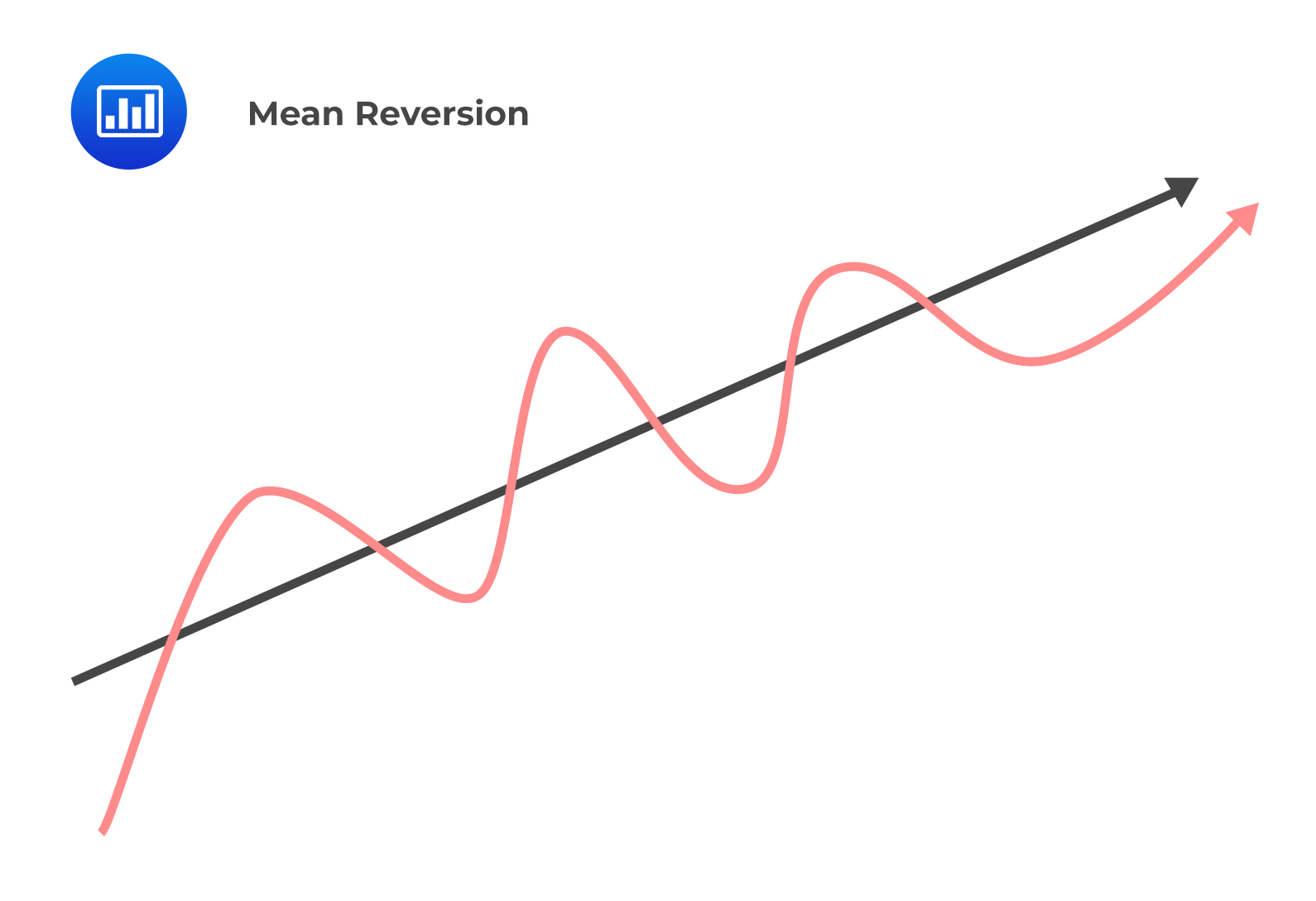
berbagiberkat.com – Mean reversion is a fundamental theory in finance and statistics that suggests asset prices, returns, or economic variables tend to revert to their long-term average or “mean” over time. In simple terms, when a price deviates significantly from its historical average—either too high (overvalued) or too low (undervalued)—it is likely to move back toward that mean. This concept underpins many trading strategies, risk management techniques, and economic models. Popularized by statisticians and later applied in markets by traders like Jim Simons of Renaissance Technologies, mean reversion contrasts with momentum trading, which bets on trends continuing. In volatile markets like 2025, understanding mean reversion helps investors navigate corrections and identify opportunities.
The Theory Behind Mean Reversion
Mean reversion is rooted in the idea that markets are not perfectly efficient in the short term but tend toward equilibrium in the long term. Extreme deviations are often temporary, caused by emotions, news events, or herd behavior.
Mathematically, it’s often modeled using:
- Ornstein-Uhlenbeck process: A stochastic model where the variable pulls back toward the mean.
- Bollinger Bands: Price channels around a moving average; prices touching the bands are seen as overbought/oversold.
- Z-score: Measures how far a price is from the mean in standard deviations.
For example, if a stock’s price-to-earnings (P/E) ratio spikes far above its 10-year average, mean reversion theory predicts it will eventually fall back.
Mean Reversion in Different Markets
- Stocks and Equities Pairs trading: Buy undervalued stock, short overvalued similar stock (e.g., Coke vs. Pepsi). Value investing (Warren Buffett) relies on mean reversion—buying cheap stocks expecting price normalization.
- Forex and Currencies Currencies often revert to purchasing power parity (PPP). Carry trade unwinds cause sharp reversions.
- Commodities Oil prices revert to production costs over time.
- Interest Rates and Bonds Rates revert to neutral levels set by central banks.
- Volatility VIX (fear index) mean-reverts; high VIX signals buying opportunities.
Trading Strategies Based on Mean Reversion
- Statistical Arbitrage: High-frequency trading exploiting short-term deviations.
- Bollinger Band Strategy: Buy when price hits lower band, sell at upper.
- RSI (Relative Strength Index): Below 30 = oversold (buy), above 70 = overbought (sell).
- Pairs Trading: Long/short correlated assets.
Backtests show mean reversion works well in range-bound markets but fails in strong trends.
Risks and Limitations of Mean Reversion
- Trend Markets: Prices can stay deviated longer than expected (“the market can remain irrational longer than you can remain solvent” – Keynes).
- Structural Changes: Mean may shift permanently (e.g., tech boom raising S&P P/E permanently).
- Black Swans: Events like 2008 crisis or COVID cause prolonged deviations.
- Overfitting: Strategies tuned too perfectly to past data fail live.
In 2025, with AI-driven markets, mean reversion signals are noisier but still valuable in volatile sectors.
Mean Reversion in 2025 Context
Amid high interest rates and AI hype, many tech stocks appear overvalued relative to historical means. Value investors favor mean-reverting sectors like energy or financials. Crypto markets show extreme mean reversion cycles due to high volatility.
Mean reversion is a timeless principle reminding us that extremes rarely last. Whether in stocks, forex, or life, things tend to balance out. For traders, it’s a tool for patience; for investors, a reason to buy low. In uncertain markets, combining mean reversion with other strategies often yields the best results. As always, past performance isn’t indicative of future results—trade wisely!
About the Author