berbagiberkat.com – Bitcoin, long revered as “digital gold” for its unmatched security and decentralization, has historically faced criticism for its limited throughput (~7 transactions per second) and lack of native smart contract support. Enter Bitcoin Layer 2 (L2) ecosystems — secondary protocols built on top of Bitcoin’s base layer (L1) to enhance speed, reduce fees, enable complex applications, and tap into Bitcoin’s massive liquidity without compromising its core security.
As of January 2026, Bitcoin L2s are experiencing explosive growth. Total Value Locked (TVL) in Bitcoin-native scaling solutions has surged dramatically (reports indicate multi-billion dollar figures across ecosystems), driven by institutional interest, BTCFi (Bitcoin DeFi), Ordinals/BRC-20 momentum, and new innovations. These L2s are transforming Bitcoin from a passive store of value into a programmable financial foundation.
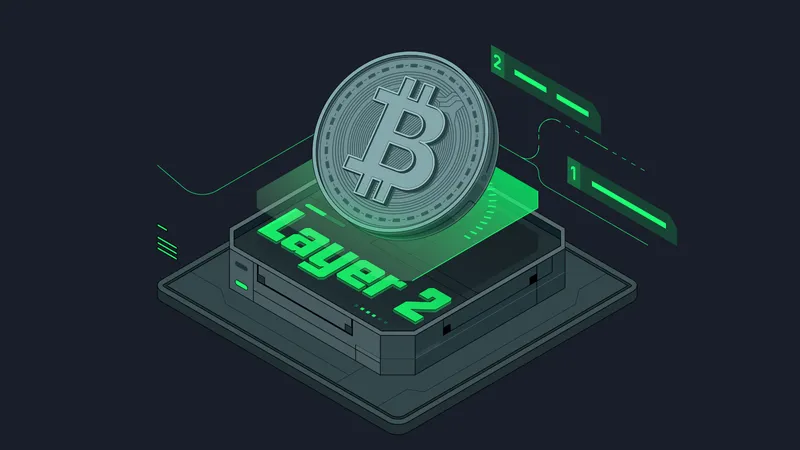
Here is a visual representation of Bitcoin’s ecosystem expanding through Layer 2 solutions — from simple payments to full DeFi and smart contracts:
What Makes a Bitcoin Layer 2?
Bitcoin L2s come in various forms (state channels, sidechains, rollups, anchored chains), but they share common goals:
- Scale transactions (faster & cheaper than L1)
- Leverage Bitcoin’s security (final settlement on Bitcoin)
- Enable programmability (smart contracts, DeFi, NFTs, dApps)
- Preserve self-custody of BTC where possible
Unlike Ethereum’s dominant rollup-centric L2 model, Bitcoin’s L2 landscape is more diverse and experimental.
Major Bitcoin Layer 2 Ecosystems in Early 2026
| Ecosystem | Type | Key Features | Notable Metrics (approx. 2025–2026) | Status & Focus |
|---|---|---|---|---|
| Lightning Network | State Channels | Instant micropayments, very low fees | Billions in capacity, high daily tx | Payments king, massive adoption |
| Stacks (STX) | Anchored Layer / PoX | Smart contracts, Clarity language, BTC finality | Leading smart contract L2 | DeFi, NFTs, dApps on Bitcoin |
| Rootstock (RSK) | Sidechain (merge-mined) | EVM-compatible, smart contracts | Hundreds of millions TVL | Ethereum-style DeFi on Bitcoin |
| Merlin Chain (MERL) | ZK-Rollup / Hybrid | EVM-compatible, ZK proofs, BTC-native | >$1.7B TVL (mid-2025), rapid growth | BTCFi, dApps, high scalability |
| Liquid Network | Federated Sidechain | Fast confidential transactions, asset issuance | Established for years | Privacy, tokenized assets, exchanges |
| Hemi | Emerging Hybrid L2 | Programmability + BTC security | >$1.2B TVL, 90+ protocols | New entrant, strong community |
| Ark | Liquidity & Payments | Off-chain liquidity, covenants-like features | Growing in 2025–2026 | Advanced payments & liquidity |
Lightning Network remains the most battle-tested for everyday payments, while newer entrants like Merlin and Hemi have exploded in TVL and dApp count thanks to ZK tech and EVM compatibility, allowing easy porting of Ethereum apps.
Stacks continues to lead in smart contract innovation, anchoring every block to Bitcoin for ultimate security.
Why Bitcoin L2s Are Surging in 2026
- Massive Idle Capital — With Bitcoin’s market cap exceeding $1–2 trillion, even small percentages bridged to L2s unlock billions in productive DeFi, staking, and yield.
- BTCFi Boom — DeFi protocols native to Bitcoin (lending, trading, yield on BTC) are attracting liquidity previously locked in Ethereum or wrapped BTC.
- Institutional & Regulatory Tailwinds — Clearer U.S. regulation (e.g., expected market structure laws in 2026) and Bitcoin ETFs are bringing more capital into regulated BTC-based products.
- Technological Maturation — ZK-rollups, BitVM, covenants, and hybrid models are maturing, enabling trust-minimized scaling.
- TVL Explosion — Aggregate Bitcoin L2 TVL has grown dramatically (hundreds of percent YoY in recent reports), with billions bridged for DeFi and apps.
Challenges Ahead
Despite the hype, Bitcoin L2s face hurdles:
- Security Trade-offs — Sidechains and federated models introduce some trust assumptions.
- Fragmentation — Many competing architectures (no single dominant model like Ethereum rollups).
- Adoption Lag — Still early compared to Ethereum L2s; user experience needs improvement.
- Bridging Risks — Moving BTC to/from L2s requires careful peg mechanisms.
The Future Outlook
In 2026, Bitcoin L2 ecosystems are no longer niche experiments — they represent Bitcoin’s evolution into a programmable, scalable financial base layer. With TVL surging, developers pouring in, and institutions watching closely, the “Bitcoin renaissance” is underway.
Whether through instant Lightning payments, full-stack DeFi on Stacks/Merlin, or privacy-focused sidechains like Liquid, these L2s are unlocking trillions in potential while preserving Bitcoin’s core ethos of security and decentralization.
About the Author