berbagiberkat.com – The Sector Rotation Cycle is a popular investment strategy that involves shifting portfolio allocations between different stock market sectors based on the prevailing stage of the economic cycle. This approach assumes that certain sectors outperform others depending on macroeconomic conditions, such as GDP growth, interest rates, inflation, and consumer sentiment. By anticipating these shifts, investors aim to maximize returns while minimizing risk during market fluctuations.
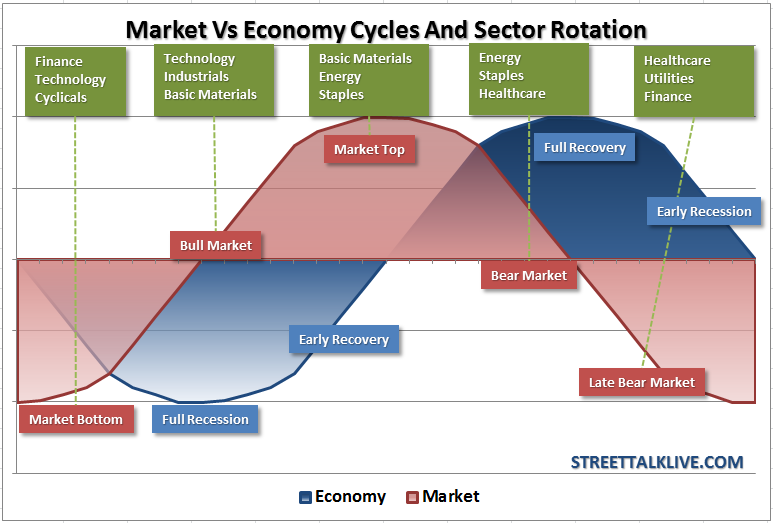
Illustration of the economic cycle clock with dominant sectors in each phase.
The Four Main Phases of the Economic Cycle
The economy typically moves through four phases, each favoring specific sectors:
- Early Recovery The economy emerges from recession: Low interest rates, fiscal stimulus, and rising confidence. Leading Sectors: Financials (banks benefit from lending), Consumer Discretionary (spending on non-essentials rises), and Industrials (infrastructure and manufacturing rebound).
- Full Expansion Strong growth phase: High GDP, low unemployment, controlled inflation. Leading Sectors: Technology (innovation thrives), Consumer Discretionary (luxury and big-ticket items), and Materials (demand for commodities surges).
- Late Expansion/Peak Economy at its strongest but showing signs of overheating: Rising inflation prompts rate hikes. Leading Sectors: Energy (commodity prices peak), Utilities (stable demand), and Consumer Staples (essential goods remain resilient).
- Contraction/Recession Slowdown or downturn: Reduced spending, higher unemployment. Leading Sectors: Health Care (constant demand), Utilities, and Consumer Staples (defensive plays).
The cycle then loops back to recovery.
Chart showing relative sector performance across economic stages.
How to Implement Sector Rotation
- Monitor Indicators: Track leading metrics like PMI, yield curve inversion, unemployment claims, and inflation data to gauge the current phase.
- Investment Vehicles: Use sector-specific ETFs (e.g., XLK for Technology, XLF for Financials) or mutual funds for easy rotation.
- Timing Strategy: Overweight early-cycle sectors during recovery signals; shift to defensives near peaks.
- Risk Management: Combine with diversification; avoid over-reliance on perfect timing, as cycles can be disrupted by events like pandemics or geopolitical tensions.
This strategy is widely used by active managers at firms like Fidelity and Vanguard sectoral funds.
Historical Examples
- Post-2008 Recovery: Financials and industrials led as stimulus flowed.
- 2020-2021 Boom: Technology and discretionary soared with remote work and stimulus checks.
- 2022 Inflation Peak: Energy outperformed amid commodity spikes.
- 2025 Outlook: With potential rate cuts, financials and cyclicals are gaining attention again.
Sector Rotation Cycle offers a disciplined framework for navigating markets, though it’s not foolproof—unexpected shocks can alter patterns. For long-term investors, blending it with buy-and-hold reduces timing errors. Study economic indicators and start small to refine your approach!
About the Author